
Accessibility Accessibility icon
CONSULTATION (303) 951-5829
Accent Image
Brown Spots?  Are you Kidding Me?

Brown Spots? Are you Kidding Me?

Brown Spots?  Are you Kidding Me?

February 16, 2013

Unless you’ve been living in a dark cave your entire life, you’re probably familiar with brown spots. And while we can call them by a number of fancy names, they are still annoying. The worst thing about them is that they seem to keep coming back. So what are they?

Brown spots, or dyschromias as we medical professionals refer to them as, are quite simply signs that your skin has suffered damage over the years and represent localized collection of pigmentary change. Another cause of these spots is changes in your hormones. Many women suffer from melasma following pregnancy, which is why these changes are often referred to as the “mask of pregnancy”.

The more brown spots you have, the less even your skin tone appears and the less youthful you may look overall. In the past, many physicians have used a variety of technologies such as IPL or CO2 laser to treat brown spots but they have found that the cures were either temporary or may have even made the spots worse. Topical compounds such as hydroquinone was used but even this had its downsides. Recently, there has been concern that long-term use of hydroquinones may actually lead to skin cancer. So what can you do?

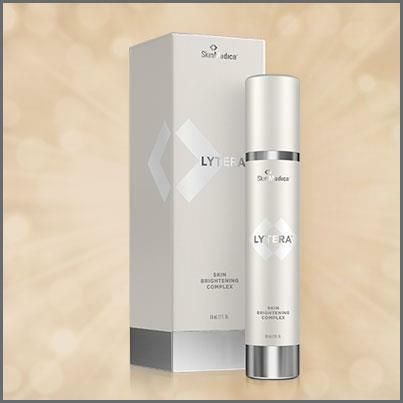
As a proud partner of SkinMedica, we are pleased to announce the release of the Lytera Skin Lightening System. This revolutionary new combination treatment is a non-hydroquinone containing product line which has been shown to safely and effectively remove brown spots and keep them away. And, unlike many other products that were only suggested for short-term use, Lytera has been proven to be safe for long-term application.

In the past week since it’s release, we have had a tremendous amount of interest just from word of mouth and anticipate that this will continue to grow. To learn more about LYTERA, click here to read Board Certified Dermatologist Dr. Annie Chiu’s insights site or feel free to either email me directly at drbuford@beautybybuford.com, call us or CLICK HERE to schedule your consultation.

We look forward to hearing from you!

Visualize your NEW LOOK in 3D NOW

START NOW
Natrelle® Breast Implants
IMPORTANT SAFETY INFORMATION

Breast implants are not lifetime devices. The longer patients have them, the greater the chance they will develop complications, which may require more surgery. Breast implants have been associated with a cancer of the immune system called breast implant–associated anaplastic large cell lymphoma (BIA-ALCL). Some patients have died from BIA-ALCL. Patients have also reported a variety of systemic symptoms such as joint pain, muscle aches, confusion, chronic fatigue, autoimmune diseases, and others.

Natrelle® Breast Implants are for breast augmentation and revision surgery in women at least 22 years old for silicone-filled implants and women at least 18 years old for saline-filled implants.

You should not get breast implants if you currently have an active infection, untreated breast cancer or precancer, or are pregnant or nursing. Tell your doctor about any conditions you have, any medications you are taking, and any planned cancer treatments. Breast implantation is likely not a one-time surgery.

Having implants removed and not replaced may lead to permanent cosmetic changes of the breasts. Breast implants may affect breastfeeding. Gel implants may rupture without symptoms, so periodic imaging after surgery is recommended.

Key complications are reoperation, implant removal, implant rupture, implant deflation with saline-filled implants, and severe capsular contracture.

Talk to your doctor for more information.

The use of Natrelle® Breast Implants is restricted to licensed physicians who provide information to patients about the risks and benefits of breast implant surgery.

Visualize your
NEW LOOK in 3D NOW!

Start now
START NOW
Natrelle® Breast Implants
IMPORTANT SAFETY INFORMATION

Breast implants are not lifetime devices. The longer patients have them, the greater the chance they will develop complications, which may require more surgery. Breast implants have been associated with a cancer of the immune system called breast implant–associated anaplastic large cell lymphoma (BIA-ALCL). Some patients have died from BIA-ALCL. Patients have also reported a variety of systemic symptoms such as joint pain, muscle aches, confusion, chronic fatigue, autoimmune diseases, and others.

Breast implants are not lifetime devices. The longer patients have them, the greater the chance they will develop complications, which may require more surgery. Breast implants have been associated with a cancer of the immune system called breast implant–associated anaplastic large cell lymphoma (BIA-ALCL). Some patients have died from BIA-ALCL. Patients have also reported a variety of systemic symptoms such as joint pain, muscle aches, confusion, chronic fatigue, autoimmune diseases, and others.

Breast implants are not lifetime devices. The longer patients have them, the greater the chance they will develop complications, which may require more surgery. Breast implants have been associated with a cancer of the immune system called breast implant–associated anaplastic large cell lymphoma (BIA-ALCL). Some patients have died from BIA-ALCL. Patients have also reported a variety of systemic symptoms such as joint pain, muscle aches, confusion, chronic fatigue, autoimmune diseases, and others.

Breast implants are not lifetime devices. The longer patients have them, the greater the chance they will develop complications, which may require more surgery. Breast implants have been associated with a cancer of the immune system called breast implant–associated anaplastic large cell lymphoma (BIA-ALCL). Some patients have died from BIA-ALCL. Patients have also reported a variety of systemic symptoms such as joint pain, muscle aches, confusion, chronic fatigue, autoimmune diseases, and others.