

Accessibility Accessibility icon
CONSULTATION (303) 951-5829
Accent Image
Does Kybella Really Work?

Does Kybella Really Work?

Does Kybella Really Work?

August 26, 2015

Slide25

As a national Kybella trainer and one of the first to offer this product in Colorado, I’ve had the opportunity of participating in its initial launch and being able to work with patients from the very beginning.

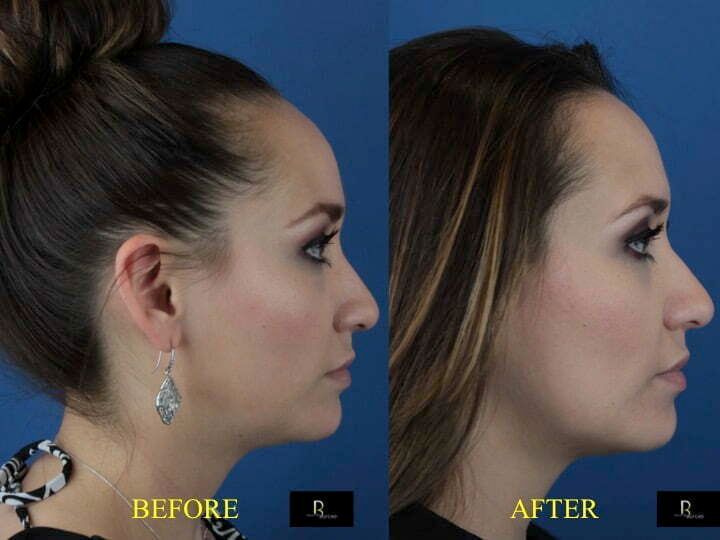
Our first patient treated was Astrid, our Patient Coordinator, who has now completed a series of 2 treatments.  As you can tell from the before & after photos, these treatments have given her not only a reduction in chin fat but also a more sculpted jawline.

IMG_2917When asked about her experience, this was her response:

“My experience with Kybella has been a great one! While I was pretty nervous and slightly skeptical, the treatment itself was quick, easy, and with only minimal discomfort that lasted about 5-10 minutes. After the swelling subsided from the second treatment, I immediately noticed a difference (I even noticed a difference after the first treatment too). My jawline is more sculpted and defined and the pocket of fat that I did have is gone. I don’t need any more treatments but if I did, I wouldn’t hesitate to have the procedure done again.”

As I explain to trainees, while Kybella is touted to dissolve fat, I don’t think this is the only reason it works.  When we perform liposuction to the neck, we usually achieve great results while actually removing very little fat overall.  Instead, the simple act of tunneling and dissecting between tissue planes (between the muscle and the skin) creates inflammation and incites a healing response.  As we all know, tissues tend to contract as they heal.  I feel that this inflammatory change, and not actually 
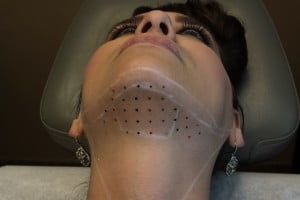
IMG_2935direct removal of fat itself, has far more to do with achieving optimal results than we give it credit for.  With this in mind, I perform my technique a little different to achieve more lateral sculpting of the jawline and don’t just focus on the medial fat only.

As we all gain more experience using Kybella, technique will most likely change on a national level as we learn how to improve treatment timing, dosage, and area treated to better optimize long term results.

To see if you would be a good candidate for Kybella, please email your photos to astrid@beautybybuford.com.  For questions, please call us at 303.747.6719.

Thanks again for your continued support.  We look forward to working with you!

Click on pic to enlarge

Visualize your NEW LOOK in 3D NOW

START NOW
Natrelle® Breast Implants
IMPORTANT SAFETY INFORMATION

Breast implants are not lifetime devices. The longer patients have them, the greater the chance they will develop complications, which may require more surgery. Breast implants have been associated with a cancer of the immune system called breast implant–associated anaplastic large cell lymphoma (BIA-ALCL). Some patients have died from BIA-ALCL. Patients have also reported a variety of systemic symptoms such as joint pain, muscle aches, confusion, chronic fatigue, autoimmune diseases, and others.

Natrelle® Breast Implants are for breast augmentation and revision surgery in women at least 22 years old for silicone-filled implants and women at least 18 years old for saline-filled implants.

You should not get breast implants if you currently have an active infection, untreated breast cancer or precancer, or are pregnant or nursing. Tell your doctor about any conditions you have, any medications you are taking, and any planned cancer treatments. Breast implantation is likely not a one-time surgery.

Having implants removed and not replaced may lead to permanent cosmetic changes of the breasts. Breast implants may affect breastfeeding. Gel implants may rupture without symptoms, so periodic imaging after surgery is recommended.

Key complications are reoperation, implant removal, implant rupture, implant deflation with saline-filled implants, and severe capsular contracture.

Talk to your doctor for more information.

The use of Natrelle® Breast Implants is restricted to licensed physicians who provide information to patients about the risks and benefits of breast implant surgery.

Visualize your
NEW LOOK in 3D NOW!

Start now
START NOW
Natrelle® Breast Implants
IMPORTANT SAFETY INFORMATION

Breast implants are not lifetime devices. The longer patients have them, the greater the chance they will develop complications, which may require more surgery. Breast implants have been associated with a cancer of the immune system called breast implant–associated anaplastic large cell lymphoma (BIA-ALCL). Some patients have died from BIA-ALCL. Patients have also reported a variety of systemic symptoms such as joint pain, muscle aches, confusion, chronic fatigue, autoimmune diseases, and others.

Breast implants are not lifetime devices. The longer patients have them, the greater the chance they will develop complications, which may require more surgery. Breast implants have been associated with a cancer of the immune system called breast implant–associated anaplastic large cell lymphoma (BIA-ALCL). Some patients have died from BIA-ALCL. Patients have also reported a variety of systemic symptoms such as joint pain, muscle aches, confusion, chronic fatigue, autoimmune diseases, and others.

Breast implants are not lifetime devices. The longer patients have them, the greater the chance they will develop complications, which may require more surgery. Breast implants have been associated with a cancer of the immune system called breast implant–associated anaplastic large cell lymphoma (BIA-ALCL). Some patients have died from BIA-ALCL. Patients have also reported a variety of systemic symptoms such as joint pain, muscle aches, confusion, chronic fatigue, autoimmune diseases, and others.

Breast implants are not lifetime devices. The longer patients have them, the greater the chance they will develop complications, which may require more surgery. Breast implants have been associated with a cancer of the immune system called breast implant–associated anaplastic large cell lymphoma (BIA-ALCL). Some patients have died from BIA-ALCL. Patients have also reported a variety of systemic symptoms such as joint pain, muscle aches, confusion, chronic fatigue, autoimmune diseases, and others.