
Accessibility Accessibility icon
CONSULTATION (303) 951-5829
Accent Image
Is Medical Skin Care Really Necessary?

Is Medical Skin Care Really Necessary?

August 1, 2013

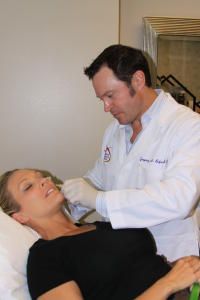
botox photosWith literally hundreds of skin care products to choose from, how in the world do you start and which products really work? The problem with a majority of the department store brands is that the companies spend their money on marketing and advertising and very little on actually research and development. These products are also not regulated by the FDA and so the companies can literally make any claim they want about their efficacy with little to worry about getting in trouble.

Medical skin care lines, on the other hand, are tightly regulated. And because they contain much stronger ingredients, they are limited to being sold through the medical office. So do these products really work any better than your over-the-counter alternative?

YES!

As a Plastic Surgeon, my reputation is only as good as the results I deliver.  And so if I recommend products to my patients that are not effective, then my patients will not get good results, and they most likely will not come back.  Also, if I do recommend good products and use them in combination with procedures such as BOTOX or use of fillers such as Juvederm, then I can generally achieve very positive results that are far better than I could achieve with the initial procedure alone.

I recorded this brief video recently and encourage you to view it to learn more about the importance of good quality skin care!  I hope this information is helpful.

And to reward you for your time, mention to my front desk what is on the last slide and you will receive 10% off your purchase of SkinMedica products (not to be used with any other offer or incentive).

Thank you!

Visualize your NEW LOOK in 3D NOW

START NOW
Natrelle® Breast Implants
IMPORTANT SAFETY INFORMATION

Breast implants are not lifetime devices. The longer patients have them, the greater the chance they will develop complications, which may require more surgery. Breast implants have been associated with a cancer of the immune system called breast implant–associated anaplastic large cell lymphoma (BIA-ALCL). Some patients have died from BIA-ALCL. Patients have also reported a variety of systemic symptoms such as joint pain, muscle aches, confusion, chronic fatigue, autoimmune diseases, and others.

Natrelle® Breast Implants are for breast augmentation and revision surgery in women at least 22 years old for silicone-filled implants and women at least 18 years old for saline-filled implants.

You should not get breast implants if you currently have an active infection, untreated breast cancer or precancer, or are pregnant or nursing. Tell your doctor about any conditions you have, any medications you are taking, and any planned cancer treatments. Breast implantation is likely not a one-time surgery.

Having implants removed and not replaced may lead to permanent cosmetic changes of the breasts. Breast implants may affect breastfeeding. Gel implants may rupture without symptoms, so periodic imaging after surgery is recommended.

Key complications are reoperation, implant removal, implant rupture, implant deflation with saline-filled implants, and severe capsular contracture.

Talk to your doctor for more information.

The use of Natrelle® Breast Implants is restricted to licensed physicians who provide information to patients about the risks and benefits of breast implant surgery.

Visualize your
NEW LOOK in 3D NOW!

Start now
START NOW
Natrelle® Breast Implants
IMPORTANT SAFETY INFORMATION

Breast implants are not lifetime devices. The longer patients have them, the greater the chance they will develop complications, which may require more surgery. Breast implants have been associated with a cancer of the immune system called breast implant–associated anaplastic large cell lymphoma (BIA-ALCL). Some patients have died from BIA-ALCL. Patients have also reported a variety of systemic symptoms such as joint pain, muscle aches, confusion, chronic fatigue, autoimmune diseases, and others.

Breast implants are not lifetime devices. The longer patients have them, the greater the chance they will develop complications, which may require more surgery. Breast implants have been associated with a cancer of the immune system called breast implant–associated anaplastic large cell lymphoma (BIA-ALCL). Some patients have died from BIA-ALCL. Patients have also reported a variety of systemic symptoms such as joint pain, muscle aches, confusion, chronic fatigue, autoimmune diseases, and others.

Breast implants are not lifetime devices. The longer patients have them, the greater the chance they will develop complications, which may require more surgery. Breast implants have been associated with a cancer of the immune system called breast implant–associated anaplastic large cell lymphoma (BIA-ALCL). Some patients have died from BIA-ALCL. Patients have also reported a variety of systemic symptoms such as joint pain, muscle aches, confusion, chronic fatigue, autoimmune diseases, and others.

Breast implants are not lifetime devices. The longer patients have them, the greater the chance they will develop complications, which may require more surgery. Breast implants have been associated with a cancer of the immune system called breast implant–associated anaplastic large cell lymphoma (BIA-ALCL). Some patients have died from BIA-ALCL. Patients have also reported a variety of systemic symptoms such as joint pain, muscle aches, confusion, chronic fatigue, autoimmune diseases, and others.