
Accessibility Accessibility icon
CONSULTATION (303) 951-5829
Accent Image
New Study Shows that Fat Does NOT Migrate After Liposuction

New Study Shows that Fat Does NOT Migrate After Liposuction

New Study Shows that Fat Does NOT Migrate After Liposuction

August 1, 2012

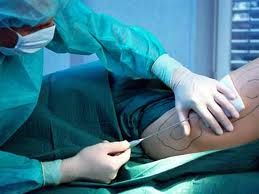
As a Denver Plastic Surgeon, a question I am commonly asked following body contouring is, “Will that fat come back somewhere else?” There are apparently a number of sites online that warn potential patients that they may gain fat in other parts of their body if they undergo liposuction.

To me, this has really never made sense from a physiologic standpoint.  When I perform liposuction, I remove or injure a certain number of fat cells in the treated area and remove the contents of these cells.  When this happens, the end result is that there is not only less volume of fat but also fewer fat cells in general.  Theoretically, if my patient maintains their current weight these remaining fat cells stay at their current volume.  If you change their diet (eat less healthy) and reduce your exercise, fat cells in the treated areas can gain volume, as can fat cells in other areas of the body.  My anecdotal feeling is that when this happens, because there are greater numbers of fat cells in the non-treated areas, it may appear that the person is differentially gaining more fat in these areas.  So, in reality fat is not migrating to non-treated areas, but the very fact that there are a greater number of storage sites (fat cells) in the non-treated areas allows for accumulation to occur more efficiently.  And this may give the appearance that the fat has seemingly shifted to different parts of your body.

The answer?  If you are motivated enough to seek body contouring, consider your procedure as a “jump start” and not a “cure”.  What I accomplish is merely an addition to what you should be accomplishing on your own with proper exercise and a healthy diet.  If you fall off the proverbial wagon, then you can gain fat and you can undo the results of your procedure.

A recent article in the Journal of Plastic and Reconstructive Surgery clearly stated that fat cells neither return to treated areas nor get redistributed to untreated areas of the body after liposuction.  This finding was in direct opposition to another study in Obesity that suggested that fat does return to untreated areas of the body within one year of surgery.

I encourage you to CLICK HERE to read more about this very interesting topic.  If you have more questions about Denver liposuction or other Plastic Surgery procedures, please call my office or email me at drbuford@beautybybuford.com

We look forward to hearing from you!

Gregory A. Buford, MD FACS

Visualize your NEW LOOK in 3D NOW

START NOW
Natrelle® Breast Implants
IMPORTANT SAFETY INFORMATION

Breast implants are not lifetime devices. The longer patients have them, the greater the chance they will develop complications, which may require more surgery. Breast implants have been associated with a cancer of the immune system called breast implant–associated anaplastic large cell lymphoma (BIA-ALCL). Some patients have died from BIA-ALCL. Patients have also reported a variety of systemic symptoms such as joint pain, muscle aches, confusion, chronic fatigue, autoimmune diseases, and others.

Natrelle® Breast Implants are for breast augmentation and revision surgery in women at least 22 years old for silicone-filled implants and women at least 18 years old for saline-filled implants.

You should not get breast implants if you currently have an active infection, untreated breast cancer or precancer, or are pregnant or nursing. Tell your doctor about any conditions you have, any medications you are taking, and any planned cancer treatments. Breast implantation is likely not a one-time surgery.

Having implants removed and not replaced may lead to permanent cosmetic changes of the breasts. Breast implants may affect breastfeeding. Gel implants may rupture without symptoms, so periodic imaging after surgery is recommended.

Key complications are reoperation, implant removal, implant rupture, implant deflation with saline-filled implants, and severe capsular contracture.

Talk to your doctor for more information.

The use of Natrelle® Breast Implants is restricted to licensed physicians who provide information to patients about the risks and benefits of breast implant surgery.

Visualize your
NEW LOOK in 3D NOW!

Start now
START NOW
Natrelle® Breast Implants
IMPORTANT SAFETY INFORMATION

Breast implants are not lifetime devices. The longer patients have them, the greater the chance they will develop complications, which may require more surgery. Breast implants have been associated with a cancer of the immune system called breast implant–associated anaplastic large cell lymphoma (BIA-ALCL). Some patients have died from BIA-ALCL. Patients have also reported a variety of systemic symptoms such as joint pain, muscle aches, confusion, chronic fatigue, autoimmune diseases, and others.

Breast implants are not lifetime devices. The longer patients have them, the greater the chance they will develop complications, which may require more surgery. Breast implants have been associated with a cancer of the immune system called breast implant–associated anaplastic large cell lymphoma (BIA-ALCL). Some patients have died from BIA-ALCL. Patients have also reported a variety of systemic symptoms such as joint pain, muscle aches, confusion, chronic fatigue, autoimmune diseases, and others.

Breast implants are not lifetime devices. The longer patients have them, the greater the chance they will develop complications, which may require more surgery. Breast implants have been associated with a cancer of the immune system called breast implant–associated anaplastic large cell lymphoma (BIA-ALCL). Some patients have died from BIA-ALCL. Patients have also reported a variety of systemic symptoms such as joint pain, muscle aches, confusion, chronic fatigue, autoimmune diseases, and others.

Breast implants are not lifetime devices. The longer patients have them, the greater the chance they will develop complications, which may require more surgery. Breast implants have been associated with a cancer of the immune system called breast implant–associated anaplastic large cell lymphoma (BIA-ALCL). Some patients have died from BIA-ALCL. Patients have also reported a variety of systemic symptoms such as joint pain, muscle aches, confusion, chronic fatigue, autoimmune diseases, and others.