
Accessibility Accessibility icon
CONSULTATION (303) 951-5829
Accent Image
Simultaneous Breast Augmentation and Mastopexy (breast lift):  One Of The Most Challenging Procedures in Plastic Surgery?

Simultaneous Breast Augmentation and Mastopexy (breast lift): One Of The Most Challenging Procedures in Plastic Surgery?

June 28, 2011

BEAUTY by BUFORD ImageBEAUTY by BUFORD Image

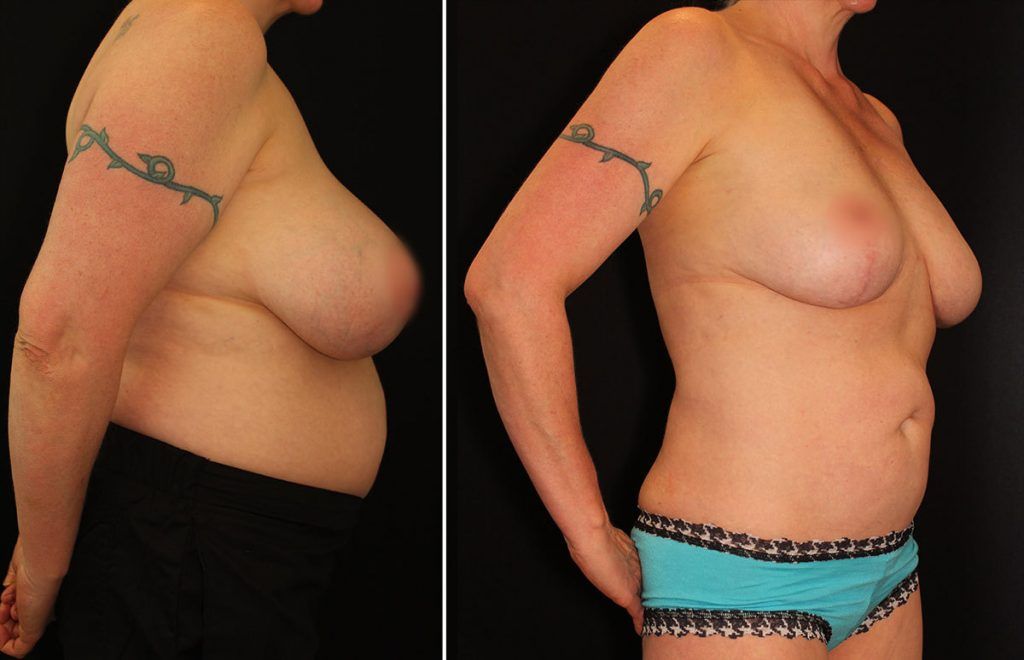
A recent article by Dr. Laurie Casas of Northwestern University School of Medicine discussed the challenges of a breast augmentation mastopexy combination procedure and stressed the importance of a thorough consultation before surgery that includes a detailed discussion of the anticipated outcome as well as the more common concerns associated with this challenging procedure.  While she emphasized the need for open communication, she ultimately commented that this procedure, when performed correctly, can provide a very high level of satisfaction for women who have lost breast volume either through the aging process, pregnancy, or as the result of significant weight loss.

Over the years, I have come to appreciate the challenges of the augmentation mastopexy procedure and have made a number of fine adjustments to increase the likelihood of a good outcome and happy patient.  In my practice, a bulk of the women that I see have lost breast volume and shape as the result of pregnancy-related changes to their breasts.  As a result, they are looking not only to address the concern of inadequate volume, but they are also looking to regain a more youthful shape overall.
 
In my opinion, to achieve the most optimal result, there needs to be a very careful and comprehensive discussion with each patient prior to moving forward to discuss not only what can be changed but also what cannot.  Pre-operative expectations are critical in that they can single handedly determine the success of the procedure as they are the determining factor in which each person expects they will actually see after surgery.  Associated scarring should also be a part of this discussion since this is one of the major reasons for a patient to not move-forward with surgery.  To address this concern, I am now performing complimentary laser scar resurfacing for my patients as early as three weeks following surgery and am seeing a very nice softening of the scarring long-term. 
During the initial consultation, I review with each patient the local anatomy and physiology of their breasts and explain what really happens as the result of the aging process. In addition to changes in the breast volume itself, there are also changes that occur to the structural framework (“Cooper’s Ligaments”) which create an overall laxity of the supporting tissue and which, in reality, are never really addressed in any breast lifting procedure.  Because of this, I personally have reduced the overall size of implants used with procedure because  I feel that by using larger, heavier implants, I am simply adding additional weight to the breasts and potentially contributing to (and possibly accelerating) the gradual process of descent.
 
A lift itself is really only a skin and glandular shaping procedure and does nothing to tighten the internal supporting ligaments.   Because of this, I am careful to discuss expectations related to the degree of anticipated “perkiness” actually attainable after this procedure.  If a woman expects to have breasts of a 16 year old following surgery, she is doomed to failure because this type of result is simply not attainable.  The patient with realistic expectations understands that her breasts will be fuller and more shapely but that the pre-existing degree of internal laxity will still remain even following surgery.  That being said, the combination of breast augmentation and breast lift (“Augmentation Mastopexy”) when performed by an experienced Plastic Surgeon with expertise in cosmetic breast surgery, can achieve results that are very dramatic and that can have positive dramatic effects on a woman’s body image.

Visualize your NEW LOOK in 3D NOW

START NOW
Natrelle® Breast Implants
IMPORTANT SAFETY INFORMATION

Breast implants are not lifetime devices. The longer patients have them, the greater the chance they will develop complications, which may require more surgery. Breast implants have been associated with a cancer of the immune system called breast implant–associated anaplastic large cell lymphoma (BIA-ALCL). Some patients have died from BIA-ALCL. Patients have also reported a variety of systemic symptoms such as joint pain, muscle aches, confusion, chronic fatigue, autoimmune diseases, and others.

Natrelle® Breast Implants are for breast augmentation and revision surgery in women at least 22 years old for silicone-filled implants and women at least 18 years old for saline-filled implants.

You should not get breast implants if you currently have an active infection, untreated breast cancer or precancer, or are pregnant or nursing. Tell your doctor about any conditions you have, any medications you are taking, and any planned cancer treatments. Breast implantation is likely not a one-time surgery.

Having implants removed and not replaced may lead to permanent cosmetic changes of the breasts. Breast implants may affect breastfeeding. Gel implants may rupture without symptoms, so periodic imaging after surgery is recommended.

Key complications are reoperation, implant removal, implant rupture, implant deflation with saline-filled implants, and severe capsular contracture.

Talk to your doctor for more information.

The use of Natrelle® Breast Implants is restricted to licensed physicians who provide information to patients about the risks and benefits of breast implant surgery.

Visualize your
NEW LOOK in 3D NOW!

Start now
START NOW
Natrelle® Breast Implants
IMPORTANT SAFETY INFORMATION

Breast implants are not lifetime devices. The longer patients have them, the greater the chance they will develop complications, which may require more surgery. Breast implants have been associated with a cancer of the immune system called breast implant–associated anaplastic large cell lymphoma (BIA-ALCL). Some patients have died from BIA-ALCL. Patients have also reported a variety of systemic symptoms such as joint pain, muscle aches, confusion, chronic fatigue, autoimmune diseases, and others.

Breast implants are not lifetime devices. The longer patients have them, the greater the chance they will develop complications, which may require more surgery. Breast implants have been associated with a cancer of the immune system called breast implant–associated anaplastic large cell lymphoma (BIA-ALCL). Some patients have died from BIA-ALCL. Patients have also reported a variety of systemic symptoms such as joint pain, muscle aches, confusion, chronic fatigue, autoimmune diseases, and others.

Breast implants are not lifetime devices. The longer patients have them, the greater the chance they will develop complications, which may require more surgery. Breast implants have been associated with a cancer of the immune system called breast implant–associated anaplastic large cell lymphoma (BIA-ALCL). Some patients have died from BIA-ALCL. Patients have also reported a variety of systemic symptoms such as joint pain, muscle aches, confusion, chronic fatigue, autoimmune diseases, and others.

Breast implants are not lifetime devices. The longer patients have them, the greater the chance they will develop complications, which may require more surgery. Breast implants have been associated with a cancer of the immune system called breast implant–associated anaplastic large cell lymphoma (BIA-ALCL). Some patients have died from BIA-ALCL. Patients have also reported a variety of systemic symptoms such as joint pain, muscle aches, confusion, chronic fatigue, autoimmune diseases, and others.