
Accessibility Accessibility icon
CONSULTATION (303) 951-5829
Accent Image
What Really Makes You Happy?

What Really Makes You Happy?

What Really Makes You Happy?

October 5, 2012

What do you look for in a positive experience at your doctor’s office? Harris Interactive recently polled 2311 adults and asked them this very question. Of the study participants, 84% had visited a doctor’s office within the past 12 months and, of these, 83% claimed that they were satisfied or very satisfied with their experience.

The top three factors they considered to be important included the following:

  • #1: Doctor’s overall knowledge, training, and expertise
  • #2: Time spent with the Doctor
  • #3: Doctor’s ability to access your overall medical history

Interestingly, one of the lower rated factors was the actual appearance of the office itself.

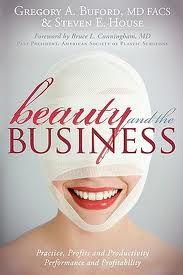
So what creates a positive experience? A few years ago when I was writing “Beauty and the Business, I explored this very question and reviewed not only feedback from my own patients but also queried other top practices and asked the same question. In today’s market where seemingly everyone is practicing medicine (even some people with no medical training whatsoever), it seems that every trick in the book is being thrown at potential patients in the hopes of not only attracting them to a practice but also for retaining them for future procedures. But as with anything, some of these tricks are just tricks and do not prove meaningful in the long run.

In my experience and from the feedback of my patients, several factors do matter. First, my patients are interested in a physician and a team that actually know what they are doing. We need to prove to you that we not only understand how to do what we do but also how to tell when something is not going well and, ultimately, how to make it right. This is important. I have always said that you should never perform any procedure unless you are able to treat its complications. But sadly, this view is not held by everyone in my industry. I would say that this is easily the number one thing that you should look for in not only a Plastic Surgeon but also in any physician regardless of their specialty.

Next, I would say that our ability to really listen to you, the patient, is important. Simply spending time with you is not enough. We need to figure out not only what your needs are but also why you have these needs, why you have them now, and what your expectations are. The only way that we can accomplish this is by actually listening. The Greek philosopher Eictetus once said, “We have two ears and one mouth so that we can listen twice as much as we speak.” I agree with him completely.

Finally, I would say that the third most important factor is your overall experience from start to finish. It doesn’t really make sense to create flashy marketing promising an amazing experience if you can’t deliver that experience. I would guess that most patients enjoy a nice office but that if they were really asked what they value, they would choose an experience that was positive, with people that appeared to actually care about their well-being, and with a physician who took time to explain the process.

We are always trying to improve our customer service and place an enormous amount of emphasis on your positive experience. I encourage you to not only CLICK HERE to read this survey but also to email us your recommendations. We only improve if we hear from you and look forward to your constructive criticism.

Thank you again for your trust in my team and in me. Please CLICK HERE to send us your suggestions. We look forward to hearing from you!

Visualize your NEW LOOK in 3D NOW

START NOW
Natrelle® Breast Implants
IMPORTANT SAFETY INFORMATION

Breast implants are not lifetime devices. The longer patients have them, the greater the chance they will develop complications, which may require more surgery. Breast implants have been associated with a cancer of the immune system called breast implant–associated anaplastic large cell lymphoma (BIA-ALCL). Some patients have died from BIA-ALCL. Patients have also reported a variety of systemic symptoms such as joint pain, muscle aches, confusion, chronic fatigue, autoimmune diseases, and others.

Natrelle® Breast Implants are for breast augmentation and revision surgery in women at least 22 years old for silicone-filled implants and women at least 18 years old for saline-filled implants.

You should not get breast implants if you currently have an active infection, untreated breast cancer or precancer, or are pregnant or nursing. Tell your doctor about any conditions you have, any medications you are taking, and any planned cancer treatments. Breast implantation is likely not a one-time surgery.

Having implants removed and not replaced may lead to permanent cosmetic changes of the breasts. Breast implants may affect breastfeeding. Gel implants may rupture without symptoms, so periodic imaging after surgery is recommended.

Key complications are reoperation, implant removal, implant rupture, implant deflation with saline-filled implants, and severe capsular contracture.

Talk to your doctor for more information.

The use of Natrelle® Breast Implants is restricted to licensed physicians who provide information to patients about the risks and benefits of breast implant surgery.

Visualize your
NEW LOOK in 3D NOW!

Start now
START NOW
Natrelle® Breast Implants
IMPORTANT SAFETY INFORMATION

Breast implants are not lifetime devices. The longer patients have them, the greater the chance they will develop complications, which may require more surgery. Breast implants have been associated with a cancer of the immune system called breast implant–associated anaplastic large cell lymphoma (BIA-ALCL). Some patients have died from BIA-ALCL. Patients have also reported a variety of systemic symptoms such as joint pain, muscle aches, confusion, chronic fatigue, autoimmune diseases, and others.

Breast implants are not lifetime devices. The longer patients have them, the greater the chance they will develop complications, which may require more surgery. Breast implants have been associated with a cancer of the immune system called breast implant–associated anaplastic large cell lymphoma (BIA-ALCL). Some patients have died from BIA-ALCL. Patients have also reported a variety of systemic symptoms such as joint pain, muscle aches, confusion, chronic fatigue, autoimmune diseases, and others.

Breast implants are not lifetime devices. The longer patients have them, the greater the chance they will develop complications, which may require more surgery. Breast implants have been associated with a cancer of the immune system called breast implant–associated anaplastic large cell lymphoma (BIA-ALCL). Some patients have died from BIA-ALCL. Patients have also reported a variety of systemic symptoms such as joint pain, muscle aches, confusion, chronic fatigue, autoimmune diseases, and others.

Breast implants are not lifetime devices. The longer patients have them, the greater the chance they will develop complications, which may require more surgery. Breast implants have been associated with a cancer of the immune system called breast implant–associated anaplastic large cell lymphoma (BIA-ALCL). Some patients have died from BIA-ALCL. Patients have also reported a variety of systemic symptoms such as joint pain, muscle aches, confusion, chronic fatigue, autoimmune diseases, and others.