

Accessibility Accessibility icon
CONSULTATION (303) 951-5829
Accent Image
Is Your First Voluma Treatment on Us?  Check this out!

Is Your First Voluma Treatment on Us? Check this out!

Is Your First Voluma Treatment on Us?  Check this out!

November 17, 2013

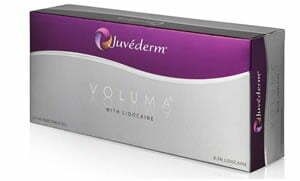
logoWe’ve been treating mid-face volume loss for years and so you can guess how excited we were when the FDA recently approved VOLUMA.  Now that we have this new product, we are anxious to show you how amazing it is and how much longer it lasts.

To get started, we’re looking for a few volunteers.  To qualify, you must be an existing client with moderate to advanced facial aging.  We’re specifically looking for volume loss to your cheeks and possibly your temples.  We’re also interested in patients who have lost volume to their hands.  You also must be willing to let us use your before/after photos to show others just how effective this product truly is.

If you think you may be a good candidate, send us a picture (straight on/at an angle) with you not smiling so that we can get a good idea of any volume-related changes.  If you’re interested in treating your hands, then send us a picture of your hands.

Candidates will be chosen this week and notified by phone and must be available for treatment within the next two weeks.  If chosen, your treatment is on us and at absolutely no cost to you!voluma_pack1ml

VOLUMA has received substantial buzz across the world and it’s finally available in the US.  We know you’ll love it and look forward to demonstrating just how effective it is and how long it lasts as compared to other currently available products.

Send us your photos, your story, and any questions to drbuford@beautybybuford.com.  And feel free to call us at 303.747.6719 as well!  To learn more about this exciting addition to our facial fillers, please CLICK HERE.

Be well!  We look forward to working with you.

Visualize your NEW LOOK in 3D NOW

START NOW
Natrelle® Breast Implants
IMPORTANT SAFETY INFORMATION

Breast implants are not lifetime devices. The longer patients have them, the greater the chance they will develop complications, which may require more surgery. Breast implants have been associated with a cancer of the immune system called breast implant–associated anaplastic large cell lymphoma (BIA-ALCL). Some patients have died from BIA-ALCL. Patients have also reported a variety of systemic symptoms such as joint pain, muscle aches, confusion, chronic fatigue, autoimmune diseases, and others.

Natrelle® Breast Implants are for breast augmentation and revision surgery in women at least 22 years old for silicone-filled implants and women at least 18 years old for saline-filled implants.

You should not get breast implants if you currently have an active infection, untreated breast cancer or precancer, or are pregnant or nursing. Tell your doctor about any conditions you have, any medications you are taking, and any planned cancer treatments. Breast implantation is likely not a one-time surgery.

Having implants removed and not replaced may lead to permanent cosmetic changes of the breasts. Breast implants may affect breastfeeding. Gel implants may rupture without symptoms, so periodic imaging after surgery is recommended.

Key complications are reoperation, implant removal, implant rupture, implant deflation with saline-filled implants, and severe capsular contracture.

Talk to your doctor for more information.

The use of Natrelle® Breast Implants is restricted to licensed physicians who provide information to patients about the risks and benefits of breast implant surgery.

Visualize your
NEW LOOK in 3D NOW!

Start now
START NOW
Natrelle® Breast Implants
IMPORTANT SAFETY INFORMATION

Breast implants are not lifetime devices. The longer patients have them, the greater the chance they will develop complications, which may require more surgery. Breast implants have been associated with a cancer of the immune system called breast implant–associated anaplastic large cell lymphoma (BIA-ALCL). Some patients have died from BIA-ALCL. Patients have also reported a variety of systemic symptoms such as joint pain, muscle aches, confusion, chronic fatigue, autoimmune diseases, and others.

Breast implants are not lifetime devices. The longer patients have them, the greater the chance they will develop complications, which may require more surgery. Breast implants have been associated with a cancer of the immune system called breast implant–associated anaplastic large cell lymphoma (BIA-ALCL). Some patients have died from BIA-ALCL. Patients have also reported a variety of systemic symptoms such as joint pain, muscle aches, confusion, chronic fatigue, autoimmune diseases, and others.

Breast implants are not lifetime devices. The longer patients have them, the greater the chance they will develop complications, which may require more surgery. Breast implants have been associated with a cancer of the immune system called breast implant–associated anaplastic large cell lymphoma (BIA-ALCL). Some patients have died from BIA-ALCL. Patients have also reported a variety of systemic symptoms such as joint pain, muscle aches, confusion, chronic fatigue, autoimmune diseases, and others.

Breast implants are not lifetime devices. The longer patients have them, the greater the chance they will develop complications, which may require more surgery. Breast implants have been associated with a cancer of the immune system called breast implant–associated anaplastic large cell lymphoma (BIA-ALCL). Some patients have died from BIA-ALCL. Patients have also reported a variety of systemic symptoms such as joint pain, muscle aches, confusion, chronic fatigue, autoimmune diseases, and others.