Accessibility Accessibility icon
CONSULTATION (303) 951-5829
Accent Image
You’re Injecting BOTOX into my What?

You’re Injecting BOTOX into my What?

You’re Injecting BOTOX into my What?

July 16, 2012

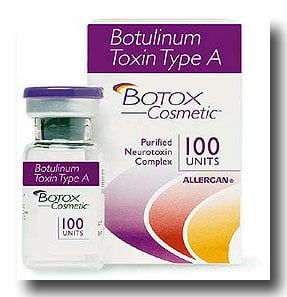
For treating facial aging, there are very things as effective as BOTOX Cosmetic.  But when it comes to where and how to inject, the rules have changed with time and how we use BOTOX today is nowhere close to how we used it even a few years ago.

As a Denver Plastic Surgeon and National Facial Injectable Trainer, I have had the opportunity to see numerous products and procedures introduced that are all aimed at treating facial aging.  In addition to new technologies, even the old ones are being used in different ways.  When it comes to BOTOX, we are using it in vastly different areas than we could have imagined and seeing very nice results that previously required more invasive treatments with far more downtime.

I have to thank a particular patient of mine for the inspiration in writing this post.  She recently came in for a routine treatment.  She generally gets injections to her medial brow, lateral brow, forehead, crow’s feet, and her lower lids.  But this time, I snuck in an extra injection to her chin.  Her first question when we were finished was, “Why in the world did you inject my chin?  You never did that before.”

And she was right.  I have never injected her chin.  But I did this time because it’s an area in which I am now seeing great results as the result of my continuing education.  How I use the injectables now is far different than how I personally used them even a year ago.  And the reason is that the learning curve is constantly changing and, with it, the various uses for the product.

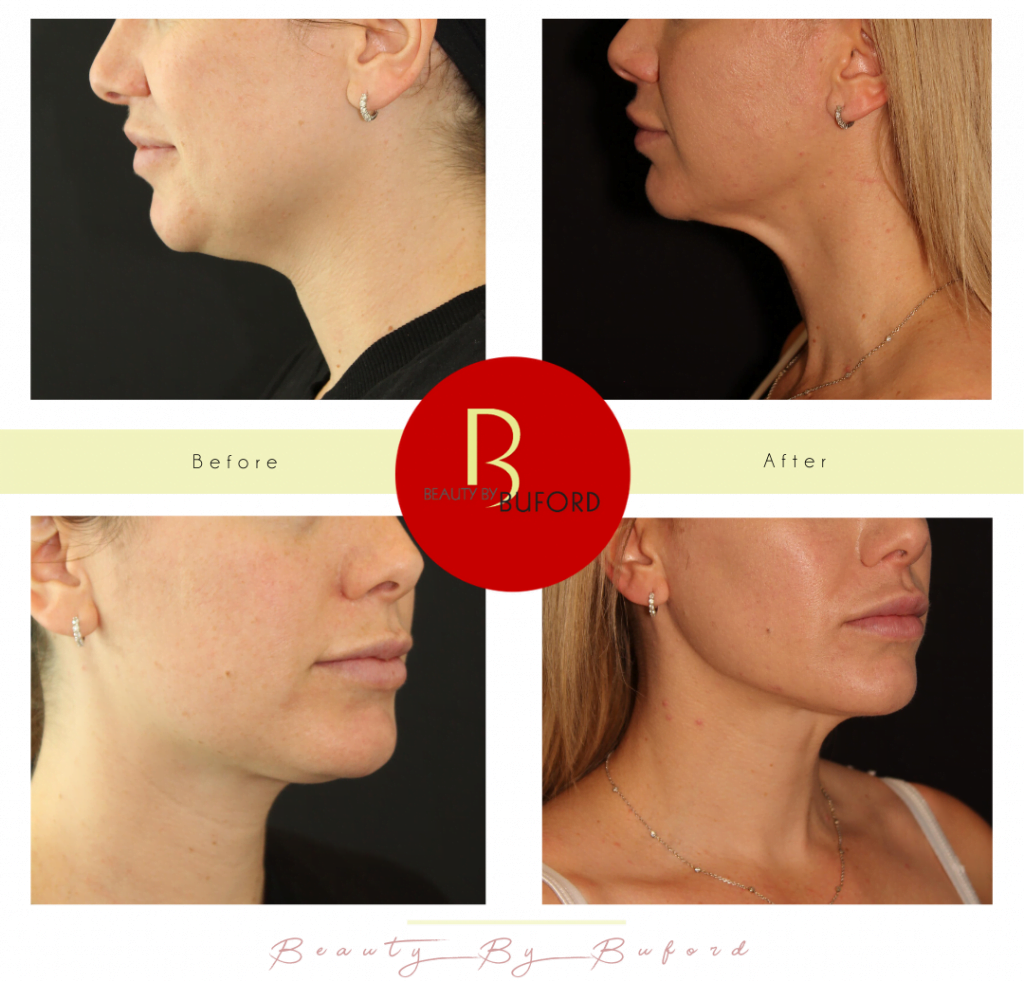
Let’s talk more about her chin.  So why did I inject this area?  What was I trying to accomplish?  The answer is that I was trying to balance the lower third of her face.  She has very nice fullness to her cheeks but her chin lacks projection.  When she smiles, her chin flattens but her cheeks become more full.  And when this happens, she loses balance between the middle and the lower third of her face.

Another reason for injecting the chin is to treat what we call a peau d’orange chin, cobblestone chin, or a dimpled golf ball chin.  This dimpling is created when the

muscles beneath the skin of the chin contract and pull their fibrous connections to the overlying skin inwards creating the illusion of dimpling.  To soften this, we simply inject the muscle with a little BOTOX.

Another reason for injecting the chin is to decrease formation of the line above the chin, which we call the mental crease (named for the underling mentalis muscle).   Repeated treatments can soften pursing of the chin which then, over time, leads to a less defined line above the chin.

As you can see, there are a number of very helpful uses for BOTOX Cosmetic that can dramatically improve the appearance of your chin.  So the next time you’re in, ask for BOTOX to your chin.  You’ll be glad you did!

Visualize your NEW LOOK in 3D NOW

START NOW
Natrelle® Breast Implants
IMPORTANT SAFETY INFORMATION

Breast implants are not lifetime devices. The longer patients have them, the greater the chance they will develop complications, which may require more surgery. Breast implants have been associated with a cancer of the immune system called breast implant–associated anaplastic large cell lymphoma (BIA-ALCL). Some patients have died from BIA-ALCL. Patients have also reported a variety of systemic symptoms such as joint pain, muscle aches, confusion, chronic fatigue, autoimmune diseases, and others.

Natrelle® Breast Implants are for breast augmentation and revision surgery in women at least 22 years old for silicone-filled implants and women at least 18 years old for saline-filled implants.

You should not get breast implants if you currently have an active infection, untreated breast cancer or precancer, or are pregnant or nursing. Tell your doctor about any conditions you have, any medications you are taking, and any planned cancer treatments. Breast implantation is likely not a one-time surgery.

Having implants removed and not replaced may lead to permanent cosmetic changes of the breasts. Breast implants may affect breastfeeding. Gel implants may rupture without symptoms, so periodic imaging after surgery is recommended.

Key complications are reoperation, implant removal, implant rupture, implant deflation with saline-filled implants, and severe capsular contracture.

Talk to your doctor for more information.

The use of Natrelle® Breast Implants is restricted to licensed physicians who provide information to patients about the risks and benefits of breast implant surgery.

Visualize your
NEW LOOK in 3D NOW!

Start now
START NOW
Natrelle® Breast Implants
IMPORTANT SAFETY INFORMATION

Breast implants are not lifetime devices. The longer patients have them, the greater the chance they will develop complications, which may require more surgery. Breast implants have been associated with a cancer of the immune system called breast implant–associated anaplastic large cell lymphoma (BIA-ALCL). Some patients have died from BIA-ALCL. Patients have also reported a variety of systemic symptoms such as joint pain, muscle aches, confusion, chronic fatigue, autoimmune diseases, and others.

Breast implants are not lifetime devices. The longer patients have them, the greater the chance they will develop complications, which may require more surgery. Breast implants have been associated with a cancer of the immune system called breast implant–associated anaplastic large cell lymphoma (BIA-ALCL). Some patients have died from BIA-ALCL. Patients have also reported a variety of systemic symptoms such as joint pain, muscle aches, confusion, chronic fatigue, autoimmune diseases, and others.

Breast implants are not lifetime devices. The longer patients have them, the greater the chance they will develop complications, which may require more surgery. Breast implants have been associated with a cancer of the immune system called breast implant–associated anaplastic large cell lymphoma (BIA-ALCL). Some patients have died from BIA-ALCL. Patients have also reported a variety of systemic symptoms such as joint pain, muscle aches, confusion, chronic fatigue, autoimmune diseases, and others.

Breast implants are not lifetime devices. The longer patients have them, the greater the chance they will develop complications, which may require more surgery. Breast implants have been associated with a cancer of the immune system called breast implant–associated anaplastic large cell lymphoma (BIA-ALCL). Some patients have died from BIA-ALCL. Patients have also reported a variety of systemic symptoms such as joint pain, muscle aches, confusion, chronic fatigue, autoimmune diseases, and others.