
Accessibility Accessibility icon
CONSULTATION (303) 951-5829
Accent Image
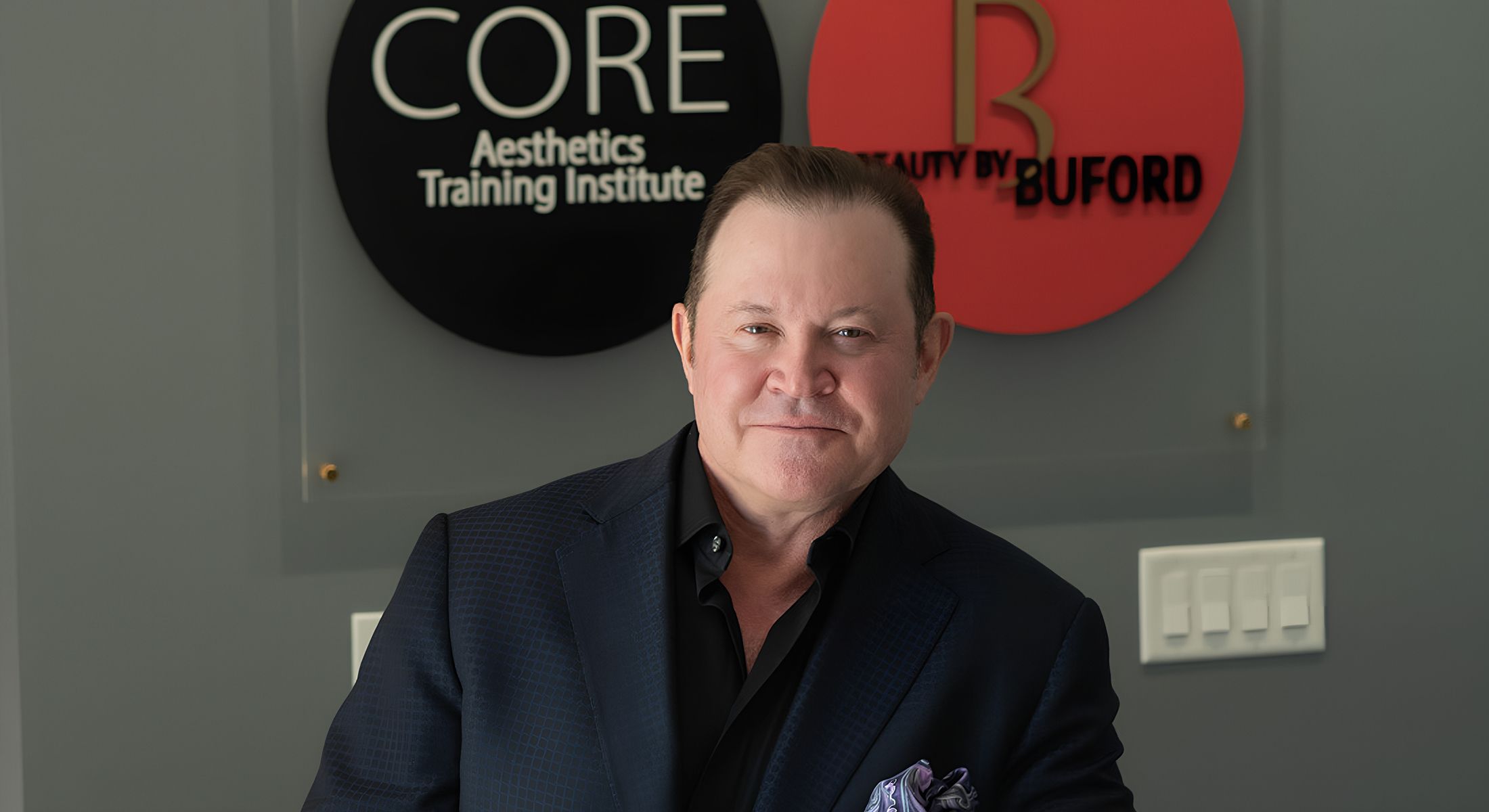
Man in front of training institute logos.

Eat, Drink, Heal

Eat, Drink, Heal: The Art and Science of Surgical Nutrition is a labor of love from Gregory A. Buford, MD, FACS, PCEO—and his goal is to help affect change in how patients are treated before and after surgery.

Eat, Drink, Heal is meant for anyone scheduled for elective or non-elective surgery and may quite simply mean the difference between a smooth recovery and one that is not.
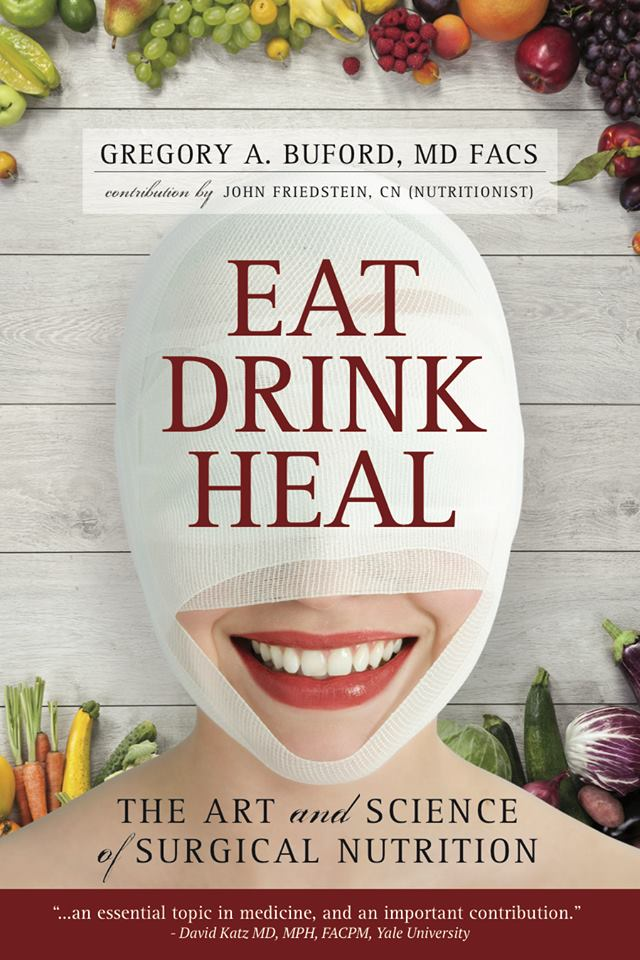

Book cover for Eat Drink Heal on nutrition.

"As a surgeon and strong believer in the power of food, I have always been surprised about the lack of education within the medical profession about how food can both help as well as hurt the healing process. Quite simply, we can do better. By recognizing the value of good nutrition both before and after surgery, we can provide better overall care to our patients."

—Gregory A. Buford, MD, FACS, PCEO
Eat, Drink, Heal in the Media

Nutrition-focused book by Dr. Gregory Buford.

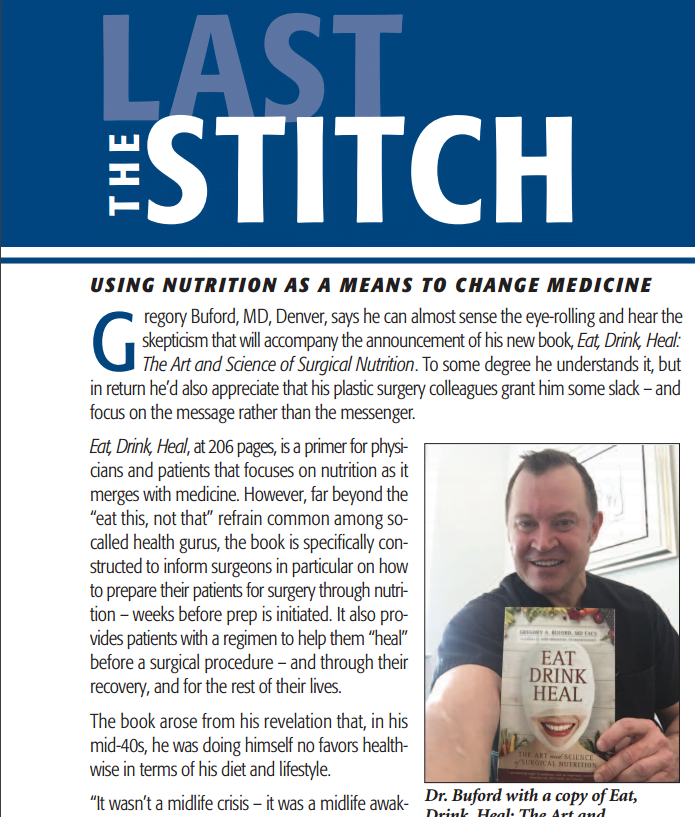
Dr. Buford featured in Plastic Surgery News: The Last Stitch

"Eat, Drink, Heal, at 206 pages, is a primer for physicians and patients that focuses on nutrition as it merges with medicine. However, far beyond the 'eat this, not that' regrain common among so-called health gurus, the book is specifically constructed to inform surgeons in particular on how to prepare their patients for surgery through nutrition."
Nutrition's role in surgery highlighted in new book.

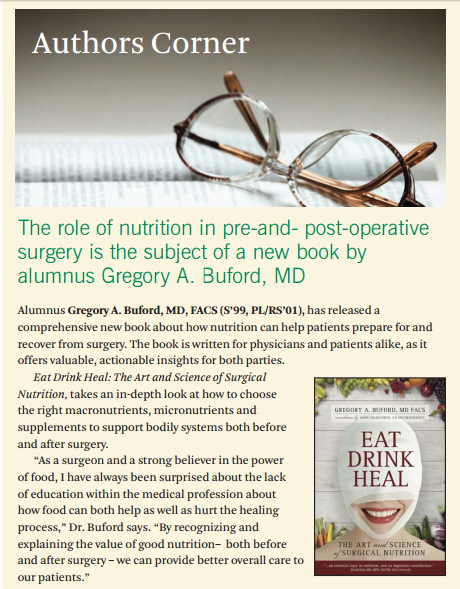
Dr. Buford & Eat, Drink, Heal featured in the Cleveland Clinic's Alumni Connection

"Alumnus Gregory A. Buford, MD, FACS (S’99, PL/RS’01), has released a comprehensive new book about how nutrition can help patients prepare for and recover from surgery. The book is written for physicians and patients alike, as it offers valuable, actionable insights for both parties."
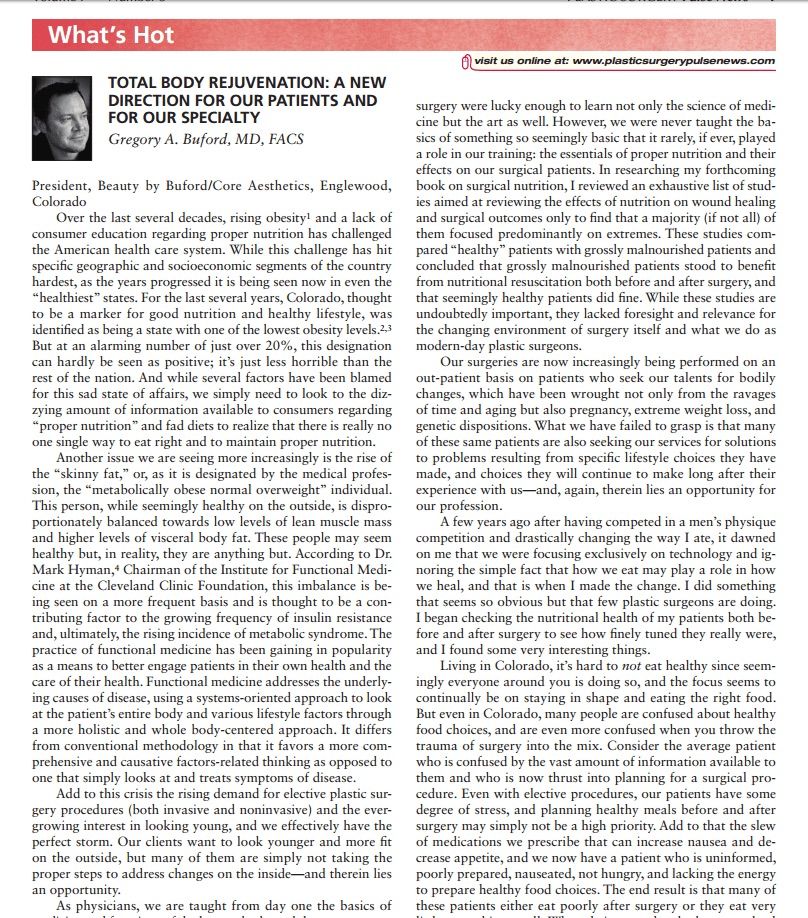
Article on total body rejuvenation and nutrition.

"Total Body Rejuvenation: A New Direction for Our Patients and for Our Specialty" in Pulse News

"A few years ago after having competed in a men’s physique competition and drastically changing the way I ate, it dawned on me that we were focusing exclusively on technology and ignoring the simple fact that how we eat may play a role in how we heal, and that is when I made the change."

Reviews of Eat, Drink, Heal

"Dr. Buford's book is an important tool for patients considering surgery. It is an exceptionally well-written and passionate argument to recognize the importance of nutrition in the peri-operative period. Dr. Buford respects the intelligence of his readers and presents complex topics in an understandable way without overly simplifying the important points. I would recommend it to all of my patients considering surgery."

Alexander Z. Rivkin, M.D. Facial Plastic Surgeon, Assistant Clinical Professor David Geffen, UCLA School of Medicine

"It's surprising that so few patients and physicians consider the major role nutrition plays in our overall health and well-being. In times of severe stress for our bodies, such as recovering from surgery, the importance of proper nutrition is even greater. In this book, Dr. Buford has given us a comprehensive, and helpful guide for a better and healthier recovery. Patients and surgeons alike should read this book."

Jeffrey A. Raval, M.D., M.B.A. Facial Plastic Surgeon

"Dr. Buford, a renowned plastic surgeon, addresses a subject which has largely gone ignored in western medicine. Educating patients in regards to nutrition is integral in both general health and post-operative healing. In our quick fix society dominated by reality television, the public is often misled into believing surgery is a fast way to improve health or appearance. In true reality, health starts with knowledge of a healthy diet and exercise. Dr. Buford provides an excellent foundation for explaining the important benefits of nutrition to optimize post-operative healing. He is comprehensive in his coverage of the subject, but masterfully simplifies the vast information to make it easy to understand. As a fellow surgeon I believe he has bridged an important gap to empower patients and allow them to achieve their best health and surgical results. I feel this is a must read for patients and surgeons alike."

John P. Fezza, M.D. Oculoplastic Surgeon Sarasota, Florida

Supporting Articles on Nutrition & Physician Education

Other Books by Dr. Buford

Visualize your NEW LOOK in 3D NOW

START NOW
Natrelle® Breast Implants
IMPORTANT SAFETY INFORMATION

Breast implants are not lifetime devices. The longer patients have them, the greater the chance they will develop complications, which may require more surgery. Breast implants have been associated with a cancer of the immune system called breast implant–associated anaplastic large cell lymphoma (BIA-ALCL). Some patients have died from BIA-ALCL. Patients have also reported a variety of systemic symptoms such as joint pain, muscle aches, confusion, chronic fatigue, autoimmune diseases, and others.

Natrelle® Breast Implants are for breast augmentation and revision surgery in women at least 22 years old for silicone-filled implants and women at least 18 years old for saline-filled implants.

You should not get breast implants if you currently have an active infection, untreated breast cancer or precancer, or are pregnant or nursing. Tell your doctor about any conditions you have, any medications you are taking, and any planned cancer treatments. Breast implantation is likely not a one-time surgery.

Having implants removed and not replaced may lead to permanent cosmetic changes of the breasts. Breast implants may affect breastfeeding. Gel implants may rupture without symptoms, so periodic imaging after surgery is recommended.

Key complications are reoperation, implant removal, implant rupture, implant deflation with saline-filled implants, and severe capsular contracture.

Talk to your doctor for more information.

The use of Natrelle® Breast Implants is restricted to licensed physicians who provide information to patients about the risks and benefits of breast implant surgery.

Visualize your
NEW LOOK in 3D NOW!

Start now
START NOW
Natrelle® Breast Implants
IMPORTANT SAFETY INFORMATION

Breast implants are not lifetime devices. The longer patients have them, the greater the chance they will develop complications, which may require more surgery. Breast implants have been associated with a cancer of the immune system called breast implant–associated anaplastic large cell lymphoma (BIA-ALCL). Some patients have died from BIA-ALCL. Patients have also reported a variety of systemic symptoms such as joint pain, muscle aches, confusion, chronic fatigue, autoimmune diseases, and others.

Breast implants are not lifetime devices. The longer patients have them, the greater the chance they will develop complications, which may require more surgery. Breast implants have been associated with a cancer of the immune system called breast implant–associated anaplastic large cell lymphoma (BIA-ALCL). Some patients have died from BIA-ALCL. Patients have also reported a variety of systemic symptoms such as joint pain, muscle aches, confusion, chronic fatigue, autoimmune diseases, and others.

Breast implants are not lifetime devices. The longer patients have them, the greater the chance they will develop complications, which may require more surgery. Breast implants have been associated with a cancer of the immune system called breast implant–associated anaplastic large cell lymphoma (BIA-ALCL). Some patients have died from BIA-ALCL. Patients have also reported a variety of systemic symptoms such as joint pain, muscle aches, confusion, chronic fatigue, autoimmune diseases, and others.

Breast implants are not lifetime devices. The longer patients have them, the greater the chance they will develop complications, which may require more surgery. Breast implants have been associated with a cancer of the immune system called breast implant–associated anaplastic large cell lymphoma (BIA-ALCL). Some patients have died from BIA-ALCL. Patients have also reported a variety of systemic symptoms such as joint pain, muscle aches, confusion, chronic fatigue, autoimmune diseases, and others.