
Accessibility Accessibility icon
CONSULTATION (303) 951-5829
Accent Image
Person posing in front of training institute signs.

The Boob Job Bible:
Your Ultimate Guide to Breast Surgery

The Boob Job Bible: Your Ultimate Guide to Breast Surgery is the latest labor of love from Gregory A. Buford, MD, FACS, PCEO—and his goal is to help to answer your questions throughout the breast surgery journey.

Breast augmentation consistently ranks as the most popular cosmetic surgery, bringing confidence and joy to nearly 300,000 women in the United States every year. If you’re thinking of enhancing your breasts, you’re joining scores of happy, fulfilled women on this path. There’s a lot of research that goes into choosing the right surgeon, choosing the right time, and ultimately choosing the right procedure that will allow you to achieve your goals. Whether you’re just now familiarizing yourself with the term “breast augmentation,” or you’re well on your way to choosing implants, you’ve come to the right place.


Guide to breast enhancement and surgery options.

"Without your support, all of us at BEAUTY by BUFORD would never have accomplished everything we have accomplished over the last 20 years. I humbly dedicate this book to all of our wonderful patients who have made us who we are today. Thank you!"

Gregory A. Buford, MD, FACS, PCEO

“[This] book is one of the most comprehensive guides to breast implant surgery I have ever read. Dr. Buford is an internationally recognized plastic surgery expert, who brings his long practical experience in breast augmentation to the public. He cuts through the disinformation prevalent online and patients will benefit by starting their homework in breast augmentation with this book. I am going to make this book readily available to my patients."

Jason N. Pozner, MD, FACS Board-Certified Plastic Surgeon in Boca Raton, FL

“I would recommend this book to anyone who is considering a breast augmentation surgery. It not only answers many misconceptions about breast enhancement surgery, it guides patients from start to finish.”

Johnny Franco, MD, FACS Board-Certified Plastic Surgeon in Austin, TX

"Dr. Buford has been an authority on plastic surgery and breast surgery for decades. His practical approach to breast augmentation is based in science and takes into consideration the patient’s needs and desires. Following Dr. Buford’s recommendations can give any woman the proportions and figure that they are looking for."

Brian J. Eichenberg, MD, FACS Board-Certified Plastic Surgeon in Murrieta, CA

"This is an outstanding guide to breast augmentation surgery that I would wholeheartedly recommend to all of my patients. Dr. Buford is a leader and innovator in our field and this book has information vital to helping patients make decisions about their surgical options in a comprehensive, honest, and easy to understand manner."

Richard G. Reish, MD, FACS Board-Certified Plastic Surgeon in New York, NY

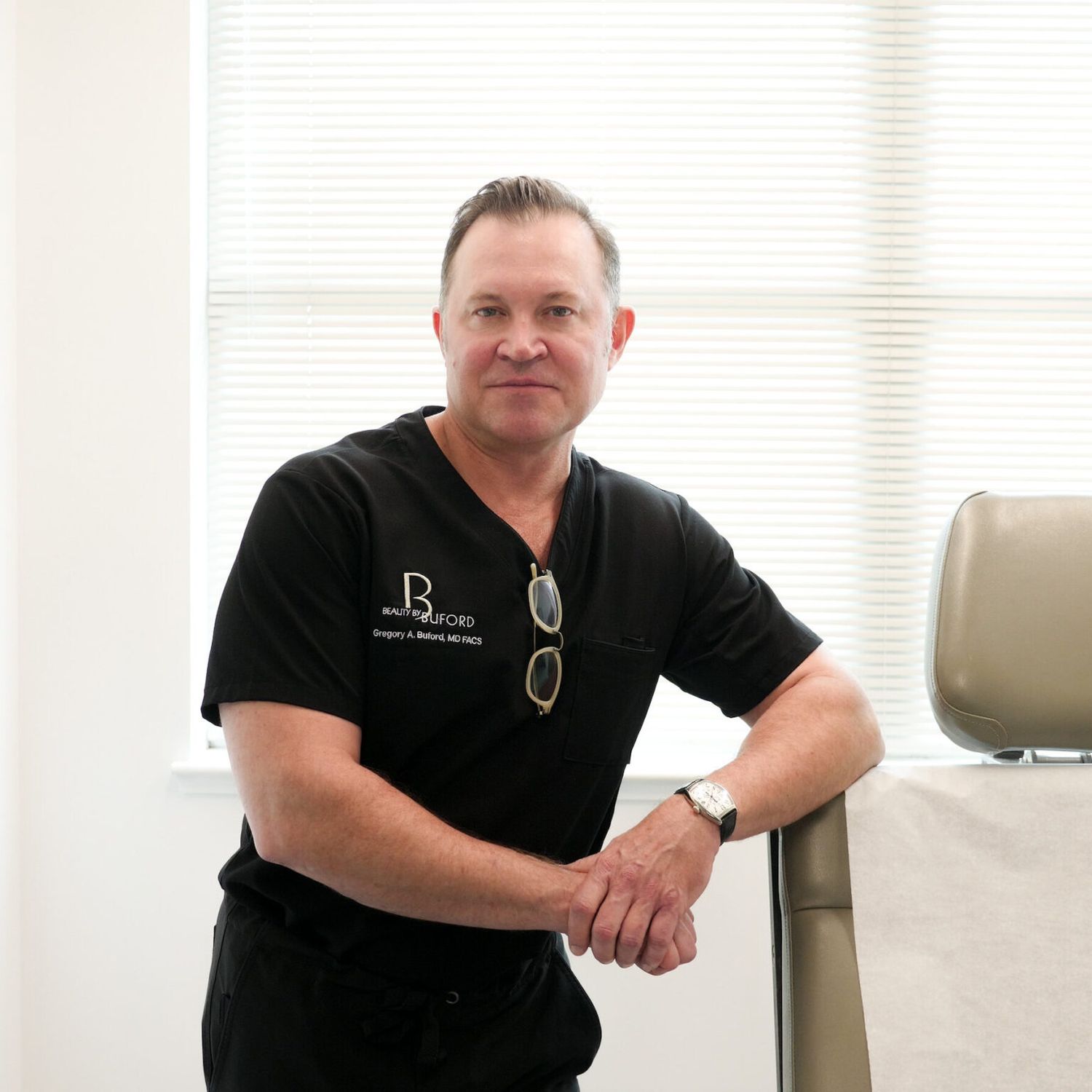
Doctor in medical office, wearing scrubs and glasses.

Visualize your NEW LOOK in 3D NOW

START NOW
Natrelle® Breast Implants
IMPORTANT SAFETY INFORMATION

Breast implants are not lifetime devices. The longer patients have them, the greater the chance they will develop complications, which may require more surgery. Breast implants have been associated with a cancer of the immune system called breast implant–associated anaplastic large cell lymphoma (BIA-ALCL). Some patients have died from BIA-ALCL. Patients have also reported a variety of systemic symptoms such as joint pain, muscle aches, confusion, chronic fatigue, autoimmune diseases, and others.

Natrelle® Breast Implants are for breast augmentation and revision surgery in women at least 22 years old for silicone-filled implants and women at least 18 years old for saline-filled implants.

You should not get breast implants if you currently have an active infection, untreated breast cancer or precancer, or are pregnant or nursing. Tell your doctor about any conditions you have, any medications you are taking, and any planned cancer treatments. Breast implantation is likely not a one-time surgery.

Having implants removed and not replaced may lead to permanent cosmetic changes of the breasts. Breast implants may affect breastfeeding. Gel implants may rupture without symptoms, so periodic imaging after surgery is recommended.

Key complications are reoperation, implant removal, implant rupture, implant deflation with saline-filled implants, and severe capsular contracture.

Talk to your doctor for more information.

The use of Natrelle® Breast Implants is restricted to licensed physicians who provide information to patients about the risks and benefits of breast implant surgery.

Visualize your
NEW LOOK in 3D NOW!

Start now
START NOW
Natrelle® Breast Implants
IMPORTANT SAFETY INFORMATION

Breast implants are not lifetime devices. The longer patients have them, the greater the chance they will develop complications, which may require more surgery. Breast implants have been associated with a cancer of the immune system called breast implant–associated anaplastic large cell lymphoma (BIA-ALCL). Some patients have died from BIA-ALCL. Patients have also reported a variety of systemic symptoms such as joint pain, muscle aches, confusion, chronic fatigue, autoimmune diseases, and others.

Breast implants are not lifetime devices. The longer patients have them, the greater the chance they will develop complications, which may require more surgery. Breast implants have been associated with a cancer of the immune system called breast implant–associated anaplastic large cell lymphoma (BIA-ALCL). Some patients have died from BIA-ALCL. Patients have also reported a variety of systemic symptoms such as joint pain, muscle aches, confusion, chronic fatigue, autoimmune diseases, and others.

Breast implants are not lifetime devices. The longer patients have them, the greater the chance they will develop complications, which may require more surgery. Breast implants have been associated with a cancer of the immune system called breast implant–associated anaplastic large cell lymphoma (BIA-ALCL). Some patients have died from BIA-ALCL. Patients have also reported a variety of systemic symptoms such as joint pain, muscle aches, confusion, chronic fatigue, autoimmune diseases, and others.

Breast implants are not lifetime devices. The longer patients have them, the greater the chance they will develop complications, which may require more surgery. Breast implants have been associated with a cancer of the immune system called breast implant–associated anaplastic large cell lymphoma (BIA-ALCL). Some patients have died from BIA-ALCL. Patients have also reported a variety of systemic symptoms such as joint pain, muscle aches, confusion, chronic fatigue, autoimmune diseases, and others.